In need to find something?
Custom Search
Related Posts with Thumbnails

Friday, May 28, 2010

Luddite, Inc.

Technorati tags: , , ,

It’s not difficult to assess if a company or corporation is tech-savvy or how it views technology. All one really needs to do is to see how the management regards IT spending, and the IT-related measures it has put in place. Oh, and another tell-tale sign is the company’s website – it says loads about how a particular organization views IT, changing IT trends, and technology in general.

Image taken from magnitude.co.uk, hosting by PhotobucketBeing professional about his work, Walski rarely, if ever, comments about the company he works for. But what he discovered yesterday was the proverbial last straw. He will not reveal which company, but those who know Walski personally would probably be able to easily guess.

Well, earlier this week, the company Walski works for put a permanent block on certain websites deemed as “Social Networking” sites.

Walski has to admit that this move is not something totally unexpected, and is, in fact, something that many large companies in Malaysia have done – the more sensible among them, though, make only office hours off-limits. One of the initiating factors is that there has been incidences of abuse amongst the staff – such as extensive Facebook activity during office hours (yes, your bosses DO read your insipid status messages), and even some staff carrying out blog-based businesses, working on their blogs instead of doing the actual work they’re paid to do.

Personally, Walski sees this as a symptom of low job satisfaction – but that’s a can of worms he doesn’t wish to open in this post. Suffice it to say, the various HR-related “measures” put in place over the last 18 months has greatly contributed to this.

What is kind of intriguing about this exercise, though, is the extent to what has been classified as “Social Networking”. Apparently, the company’s definition is quite far-reaching…
(Information Technology, luddite style, and more,  in the full post)

For a company that has grown almost 6-fold in terms of employee size, in the last 4+ years that Walski’s been on board, he seriously thinks that the IT infrastructure has not kept up with demand. Instead, mitigation measures have been put in place, including restricting employee access to the Internet. It’s no surprise, therefore, that our web presence is as insignificant to what it was in 2005, a clear indication of where IT sits on the priority ladder.

So, instead of looking at web-based marketing, improved web presence and cutting edge customer interaction strategies, we have gone in the other direction instead, internally blocking Facebook, LinkedIn, MySpace, Twitter and YouTube, plus any other site that resembles social media (like the entire Seesmic site), including image-sharing sites like Flickr, Imageshack, Photobucket and Webshots. Picasa seems to have been spared, but Walski suspects only because to block Picassa, it would require the entire Google.com domain to be blocked.

Not so surprising, however, is the fact that quite a number of Twitter-related remain unblocked. This is likely due to the fact that those responsible for the blocking orders don’t make use of these tools, or have ever used Twitter. Therefore, up to now, sites like TweetPhoto, Twitlonger, and Bettween remain blissfully unblocked.

But guess what? On top of what’s generally considered to be the “Social Networking” usual suspects, the entire Blogspot and Wordpress domains have also been blocked – meaning that as far as the management is concerned, blogs too have been classified as “social media”!

Blogs - Access Denied, image hosting by Photobucket

So, by default, any industry blogs that happen to reside on either one of these domains are blocked as well. Not a very intelligent thing to do. As of the time of this posting, access to most other non-“Social Networking” industry websites

Thus far, this blocking maneuver has only been done on a URL and/or domain basis, and not port blocking. Which means that Twitter is still accessible via applications such as the Adobe Air based Twhirl or Seesmic Desktop applications.

How long until the next drastic limiting move by the company is anyone’s guess, but if Walski’s hunch is correct, the normal day-to-day communication demands of e-mail and Windows Live Messenger (used company wide for instant messaging) of a very much expanded employee population, will soon overtake the bandwidth available.

If anyone were to ask Walski, the root-cause problem is that we do not have proper focus on IT needs and planning corporation wide. There’s no IT department, per se – instead, all IT “needs” are outsourced to a third-party service provider, who are an adequate supplier, but not really in a position to plan for us – they only do what they’re told. They’re fine at supplying hardware and software, and to a certain degree, server deployment.

There are, in fact, many benefits of using Social Networking platforms for marketing and business purposes. But a quick look at our corporate website will immediately tell you how abysmal and so not-up-to-date we are.

What this company really needs is a CIO or CTO type person, who can then properly advise and plan for anticipated requirements and demand. Then again, these are luddites we’re talking about anyway, who only choose to see the co$t associated with IT, and less often the benefits – which is why our accounting “system” still resides in Excel spreadsheets.

It would seem that, to those who run Luddite, Inc., the governing equation is:

Less IT = Less Cost = Bigger Bottom Line

Nevermind that a company remains a luddite corporation incapable of harnessing the power of IT and the many possibilities that today’s Internet has to offer. Which is also why our administration staff size is on the large-ish side, preferring to hire people to do grunt work, rather than invest in productivity tools, and adequate training to fully utilize those tools.

Now, on the surface it might seem as though that this post is nothing more than a rant about the corporation Walski works for. Not quite true – rather, it’s a commentary of how backward some companies are when it comes to IT, and how IT is regarded.

It just so happens that he works in such a luddite environment – call it a luddite epiphany, on Walski’s part, if you would. He is also very well aware that the company he works for is not unique in this respect. Mention things like Facebook, Twitter and blogs, the first thing that comes to the minds of the management is likely to be negativity.

But can luddites change? Or, are they so comfortable with what’s familiar, that the very thought of leaving their luddite comfort zone prevents any consideration for even looking at the benefits that new ways of doing things online, and new tools, can bring?

Being a geek, it’s sometimes quite frustrating for Walski to work for a company that sells technology to others, and yet is rather backwards when it comes to deployment of technology internally within the organization.

Walski reckons, however, that he’s not alone in the world when it comes to feeling this way. It’s probably part and parcel of working for Luddite, Inc.

Walski's historical terminology footnote: The term "luddite", in modern usage, refers to people who are fearful of technology, and the changes that technology brings. In a more derogatory manner, it also refers to people who are terminally thick when it comes to technology. The term originates from the name of a social movement of textile artisans in Britain during the Industrial Revolution in the 19th century, who protested against mechanized looms, which they felt left them without work and changed their entire way of life (source: Wikipedia). It is in no way a complimentary term, and it’s usage in this post is deliberate. Walski does not like luddites very much, as you can probably tell…

Reblog this post [with Zemanta]

Click here for the full post......

Monday, May 17, 2010

Opinion Poll: In case of a zombie holocaust...

Technorati tags: , , ,

Sometimes, the inspiration for polls comes to Walski in the strangest of ways. This time, it was the coming together of two bits of news via Twitter, while he was waiting for his lunch to be served this afternoon.

Book cover of "Paul is Undead" from Amazon.com, image hosting by Photobucket The first news bite (pun intended) concerns a new graphic novel to be released next month, entitled Paul Is Undead: The British Zombie Invasion. Yup, someone came up with the brilliant idea of what The Beatles would’ve been like if they were zombies – three out of the four, at least.

Even better, there’s a chance that in the not too far future, we might even see a film adaptation (via NME).

With the success of recent classics given the zombie treatment, like Pride and Prejudice and Zombies, it was inevitable that The Fab Four would be subjected to the same manner of immortalization. It was only a matter of time.

Oh, and Shaun of the Dead? Classic!

The second bit (or bite) of news was somewhat more mundane – concerning Walski’s favorite political punching bag, Ibrahim Ali.

In the wake of BN’s defeat in Sibu yesterday (yet another by-election), Ibrahim Ali once again came out imploring the BN-led government to review financial aid and and development projects for the Chinese community (via The Malaysian Insider).

Yeah, yeah… more of the same ‘ol from the independent MP. Walski did say it was mundane. Yawn.

But, mash the two bits of news together, throw in a pinch of salt, and liberally stir the concoction, what you get as a result is a rather offbeat opinion poll...
(what if there were a zombie holocaust, and more, in the full post)

So, what do you think – in the unlikely event of a zombie holocaust, what would Ibrahim Ali most likely be?  Walski guarantees you that myAsylum is probably the only blog where you’ll find the word “zombie”, and the name Ibrahim Ali in the same poll. Or blog post. Or both.

You can vote either on the sidebar (to the right of this post), or via Twtpoll.com, which hosts the poll.

After putting this poll together, it occurred to Walski that the poll wasn’t quite as frivolous as he’d originally thought. He won’t explain why just yet – suffice it to say that the poll, and the possible responses, do reflect reality, in some twisted Walski-fied way.

But here’s a hint:

From SavageChickens.com, image hosting by PhotobucketTaken from Savage Chickens - home of the zombie chickens

All will be explained when we analyze the results, which should be at the end of May, or at some point earlier, if and when Walski gets tired of the poll. In any case, the plan is for the poll to remain open until May 31, 2010.

Or, until a horde of zombies devours the Twtpoll server. Whichever is sooner.

Reblog this post [with Zemanta]

Click here for the full post......

Saturday, May 15, 2010

"Selepas Tsunami" and the futility of old school suppression

Technorati tags: , , , ,

Image taken from DNA pamphlet, image hosting by Photobucket A few days ago in Sibu, the police seized 243 copies of Selepas Tsunami, a documentary by Anna Har, produced for Komas. The seizure was made on grounds that the documentary was suspected to be seditious – that popular catch-all allegation when no other valid grounds can be found.

Police seized 200 video compact discs (VCDs) with the title "Selepas Tsunami" (After the Tsunami) in a 4pm raid at house in Jalan Bruang here Tuesday.

Sarawak CID chief SAC II Huzir Mohamed said the VCDs contained contents in the Iban language and were of a seditious nature.

He said police believed the VCDs had been brought in large numbers to Sibu for distribution at longhouses around here in the run up to the Sibu by-election on Sunday.

"We also seized a number of campaign pamphlets along with the VCDs. Investigation are ongoing to trace the parties responsible for bringing in the VCDs and the case is being investigation under the Election Offences and Sedition acts," he told a press conference here.
(source: Bernama - May 12, 2010)

According to an e-mail from Anna, “Next day, the police reverted saying that they have checked it out and its [sic] NOT seditious”, adding that the 243 copies have not been returned, and are still in the possession of the authorities. This was reported in Malaysiakini’s Bahasa Malaysia portal.

So, what does Komas do? Like a hip media organization would be expected to do, they went ahead and made the entire documentary available online.

And what does Walski do? The obvious thing any concerned blogger would, can, and often does do – disseminate it even further. 
(the documentary in its entirety, and more, in the full post)

So, here it is, in all its suppressed glory, the documentary the authorities (at least the ones in Sibu) don’t want you to see…

Now you can discern for yourself – seditious, or merely being objective?

Like poison ivy rashes that irritate one to no end, objectivity is unfortunately one of those things many people are allergic to. Particularly those who think that the “official” viewpoint is the only valid viewpoint.

Technology has changed the way things work – a simple and obvious concept that the old school practitioners of information gate-keeping apparently still cannot grasp. The VCD seizure in Sibu, and the subsequent online backlash, is the most recent example.

Ignorance, some say, is bliss. So, too, it would seem, is being in denial…

Reblog this post [with Zemanta]

Click here for the full post......

Thursday, May 13, 2010

Reimagineering May 13

Technorati tags: , , , , ,

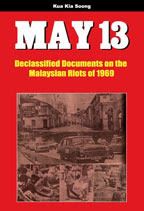
Well, it’s that time of year again, sports fans – May 13th, one of the blackest of days in our nation's history. Today marks the 41st anniversary of the tragedy, which happened a long time ago in 1969, when Walski was but a wee tot.

Speaking of sports, Malaysia beat Denmark 3-2 in the Thomas Cup 2010 quarter-finals last night. And what Walski witnessed during the tournament broadcast, and on Twitter, has some bearing on what this post is about. But more on that later on in the post.

So yeah, back to May 13th. And when this date approaches, without fail, there will be those who will habitually raise its specter, hinting in some ways that if certain status quos are not maintained, the tragedy just might re-occur. Usually in a “don’t provoke the hornet’s nest” kind of rhetoric.

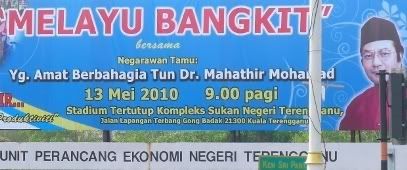
Image taken from Malaysia Today, hosting by PhotobucketBanner for the now-aborted gathering (from Malaysia Today)

This year is no exception – the now indefinitely postponed gathering organized by an NGO who call themselves Gerakan Kebangkitan Rakyat, or GERTAK (which means “threaten” in Bahasa Malaysia), which was supposed to take place today in Terengganu, came under intense criticism for scheduling the gathering today. Of all days. And having a name like GERTAK doesn’t help a bit.

In all fairness, the NGO wasn’t formed specifically for the event today, and as indicated in their blog, was actually formed earlier this year on January 3rd. But going by the shenanigans that similar Malay-rights groups, like Perkasa, have pulled thus far, picking May 13 for their "Melayu Bangkit” (“Malays Arise”) event could be construed as provocative. No matter how innocuous the program was claimed to have been (emphasis by myAsylum).

“We are not threatening anyone. It’s just an event to remind the Malays of what had happened on that fateful day so it won’t happen again in the future.

“The Malays were united in the fight for independence but after that, at that point on May 13, the Malays were weak, divided. Our economic status was low,” said Razali in his own interpretation of the race riots during which hundreds were killed.

(source: The Malaysian Insider)

But herein lies the irony – anyone who was between, say 18 and 45, the likely age demographic of political activity in 1969, would today be between 59 and 86. Not exactly spring chickens, so to speak, nor likely to be at a very economically active age.

So, whom exactly are these painful memories, dredged up year after year, meant to be a reminder for? It’s as if this constant reminder is for no other purpose but to keep May 13 as a perpetual bogeyman, whose memory gets annually resurrected for reasons other than just remembrance.

And even if you weren’t even yet a glimmer in your parent’s eyes 41 years ago, you had damned well better “remember” this tragic event.

But just in case it escaped anyone, allow Walski to remind you that we’re no longer living in 1969. And neither is today’s socio-economic environment anywhere close to what it was 41 years ago.
(three initiatives towards reimagineering, and more, in the full post)

So anyways, fast forward to last night, during the Thomas Cup 2010 quarter-finals, where in the last game to settle the then 2-2 game score, Muhd Hafiz Hashim was up against Joachim Persson. Both in the indoor stadium, and on Twitter, Malaysians were cheering Hafiz on. Not as Malay Malaysians, Chinese Malaysians, Indian Malaysians or Dan-Lain-Lain Malaysians. But as Malaysians.

Not that Walski wishes to state the obvious, but sports is indeed a unifier. And it was a unified Malaysia that was cheering Hafiz on. And if there were in the audience (or on Twitter) any members of Perkasa, Gertak, or any of the Malay-only champions of whatever, they were there as Malaysians cheering the national team on.

Isn’t it time that we moved forward that way, as a truly united citizenry? Last night showed that it’s not something impossible to wish for.

41 years is long enough – nay, too damned long – to harbor and nurture a stigma that should have been put behind us long ago. It’s time we moved on

Malaysians will live through today, the 41st anniversary of a dark blotch on our nation’s history, doing many things. Being a week day, most of us will be at work, or fighting traffic to get to work, during most of the daylight hours.

Without a doubt, at least a handful of politicians will go to press with his or her thoughts about today’s. Some of them might be insightful, and as history has shown, some of them will undoubtedly be entertainingly asinine. And become fodder for hilarious Twitter hash tags that will last the remainder of the day, or even longer.

But there are three “events” happening today that Walski would especially like to highlight.

The first, and the only organized single event out of the three, is a talk series presented by Starbucks – Live & Inspire, which will be held tonight at 8pm at Level 2, Bangsar Village 2, Kuala Lumpur.

What makes it extra special is that this time around, Anas Zubedy will be the featured speaker. Anas has been a very active proponent of national unity, and through his company, Zubedy (M) Sdn Bhd, has been putting up unity full-page ads in The Star on key celebratory dates throughout the year. You will find one of those ads in The Star today.

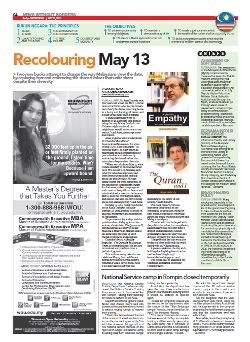
This time around, in addition, he has started a campaign called Recolor May 13. The purpose is best explained in a posting Anas did on his blog this past Sunday.

Image hosting by Photobucket When reflecting on May 13, 1969, we can blame others for what happened, blame the situation, or we can choose to transform things for the better, to be change agents and constructively fill our hearts and minds with what needs to be done so May 13 does not ever happen again, and that no one uses the day to bring about fear and negativity.

What thoughts can we cultivate to make a difference to how May 13th is viewed? What actions can we take to shine a light on this day so it will forever be a day we learn from mistakes, a day we strengthen unity in our diversity and recommit to respecting one another and working together?

At zubedy we believe in re-coloring May 13 with all our brilliant hues, the many diverse peoples that we are, under this one great nation called Malaysia. We believe it is a day to reaffirm our shared values and traditions and rejoice in what unites us. A day for young and old to constructively talk about what makes us one people and how we can remain strong together.

(source: Anas Zubedy)

In conjunction with this campaign, two books will also be released, one by Anas himself, and the other by Dr. Chandra Muzaffar, of the International Movement for a Just World (JUST). Both of these books, plus the Recolor May 13 initiative, were highlighted in an article published last Tuesday in The Sun (on page 4, shown on the right – download a PDF copy), and today in The Star. Both publications are part of the Zubedy Unity Series.

The book by Dr. Chandra Muzaffar is entitled “A Plea for Empathy – The Quest for Malaysian Unity”, a collections of articles written by Dr. Chandra over a period of 34 years.

Anas’ book, “The Quran and I” chronicles his growing up as a Muslim in Malaysia, at the same time highlighting how universal values found in the Quran can be found through daily life experiences, and how a multi-cultural Malaysia is actually a fertile ground for personal growth.

Walski can personally attest to the fact that Anas, as a person, is one of the nicest people you could meet, and that his outlook in life is definitely inclusive – that each one of us has that unique something, which cumulatively as a whole is what makes Malaysia such a wonderfully unique place. And it’s exactly that diversity that we should celebrate and hold dear.

Which segue ways into the other two “events” for today. Both of which have to do with diversity, and incidentally, have both relied on a very important aspect of our 21st century lives to disseminate – social media. Now, you may have your dissenting opinions about social media prevalence in our day and age, and Walski has no intention to debate it here, but if you’re honest about it, you can’t dispute its potentials. One of which is to bring people together.

The first of the two, is May 13 – Malaysian Interracial Hook-up Day (via Facebook), organized by a group of young Malaysians who feel today shouldn’t be about dredging up painful memories and fear-mongering. In fact, quite on the contrary.

Image taken from the event's Facebook page, hosting by Photobucket It's about time that we reclaim May 13 for ourselves and tell people who want to divide us Malaysians to keep their mouth shut because WE ARE MOVING ON. We are moving on from racist ideologies and we are moving into a Malaysian ideology, one that respects and celebrates diversity and equality.

Come this May 13, 2010, throw away hatred and prejudice and hook-up with someone from a different race or religion or culture or colour! Wherever you are whether if you're in Malaysia or not, ajaklah your friend(s) out... Go for a movie or a nice dinner or to a nice beach or to a nice hotel (to errr... listen to err... music). Have twosomes, threesomes, foursomes, or x-somes anyway you like it! The more the merrier!

Interracial FTW!! \^.^/

(source: Facebook)

And unlike the Gertak event, which is targeting God-knows which age demographic, May 13 – Malaysian Interracial Hook-up Day is targeted at the young – and young at heart. It’s been often said that youth is wasted on the young – in this instance that precept is utterly WRONG, because it’s the young who seem to know better, want to move on, and are leading the way. By example.

The beauty about this initiative is that it’s not something big scale, everybody-in-one-designated-location old school kind of event thingy – it’s up to you to create a mini-gathering of your own, and to do your own thing. The importance of this initiative is not in the size of the event, but in the spirit of it – that we are, at the end of the day, in the same boat, sink or swim, through thick or thin. For Walski, that’s the real take-away.

The second via-social media initiative is something called May 13 Blogswarm (via Facebook. Again) - and guess what? If you’ve gotten this far, you’re in fact reading a participating entry! The origins of this initiative, before it landed on Facebook, can be found on this LiveJournal page.

I am proposing a blogswarm on May 13, about, well, May 13 1969! We know how it's been a bugbear for us since forever ago - on the one hand it's a reminder about what racial disunity is like, but on the other hand, politicians use it as a threat so we don't talk about racism in Malaysia. It means many different things to different people.

So on, or for May 13, we can all blog about whatever comes to mind when we think about May 13. For example:

- A history of what happened on May 13 as you understand it (use your own words, not Wikipedia's). How were you taught about May 13? Did you learn more later on that changed how you thought about it?
- If you have any relatives who was there and participating, or if YOU were there and participating, share your stories!
- How has Malaysia changed since 1969? How has it not changed?
- Since May 13 was caused by racial polarization, what do you think of race relations today?
- Do you think we're still divided? What examples of racism have you seen that tells us we're not past May 13 yet?
- Tell us how you really feel about the NEP!
- Talk about generational gaps in viewing May 13, or the absence thereof of remembering this date.
- How do you feel about the way government is being run right now? Do you have any recommendations on what really should happen?
- How do specific race-based government policies affect you and/or your loved ones?
- Poems, stories, essays about, on, set during, themed, around May 13.
- anything else you can think of to remember May 13.

Write in English, or Malay, or Chinese, or Tamil, or Malaysian-English, or bahasa pasar, or whatever you feel like writing in. I'll make a post so people can copy-paste their URLs and we can see what everyone else has written. If you want to write something but don't want to be linked, that's cool too! The point of the blogswarm is to encourage expression of our thoughts, not to get into internet arguments.

(source: LiveJournal)

And as what usually happens to great viral ideas, it caught on.

Image taken from May 13 Blogswarm page on Facebook, hosting by PhotobucketAs seen on the Malaysians LJ community, I'm inviting everyone to join in the May 13 Blogswarm. For too long, the spectre of May 13 has haunted us. So here's a challenge for May 13. Instead of burying it and pretending everything's hunky dory, let's talk about it.

What does May 13 mean to you? What do you know about May 13? Have we moved on since then? Have we stayed stuck in the past?

Tell us. Tell everyone. Do it in a Facebook note. Do it in your blog. Write a poem. Shoot a video. Joke about it. Cry about it.

Let's make May 13 a day to talk. And listen.

(source: Facebook)

So today, if you own a blog, blog about how you feel – it can touch on any of the ideas above, or just about how you feel May 13 should be regarded. And don’t forget to leave a link to your post in the comments here (or alternatively, leave a link at the May 13 Blogwarm Facebook page). If you have a Facebook account, write there. If you’re on Twitter, be sure to include the #swarm13may hashtag in your tweets.

Trust Walski on this one – there will be a whole lot of folks who will want to listen to your thoughts. And hopefully, learn and reflect.

Three great initiatives, all of them, each in its own way. But the underlying themes of all three – moving on, and unity, as a people.

Perhaps one day, May 13th will become Malaysia’s Unity & Reconciliation Day. And if Walski had his way, that’s what he would do. But until that happens officially, it really is up to us.

Some of us will probably continue to resurrect the ghosts of May 13, as organizations like Perkasa, Gertak, and what have you, have been doing, and in all likelihood, will continue doing for years to come. Well, let them – it’s their right, and if they choose to live in an anachronism, well let them be.

Walski, and he believes, a vast majority of other Malaysians, would prefer to move on in a manner more productive, reconciliatory, and unified. We are diverse in many ways, but lets make that diversity work for us, and not divide us.

It’s time for some serious reimagineering of that too-often evoked tragedy that was May 13, 1969. It happened, it’s history, and it’s time to move on.

And that time, sports fans, is now

Reblog this post [with Zemanta]

Click here for the full post......

Tuesday, May 11, 2010

Going Nu-killer - Another View

Technorati tags: , ,

Dr. Homer J. Manhattan - image taken from DanMeth.com (click image to view source), hosting by Photobucket Not half an hour after the latest Top Ten was posted yesterday, our friends at PopWire posted something on myAsylum’s Facebook page. It was a link to a letter written to the Malaysian Naturalist magazine, by Ian Hall (of Arkitrek), a self-confessed environmentalist.

Since the Top Ten list, despite its title, was pretty much Walski’s glib way of saying we shouldn’t have nuclear power (which only somewhat reflects his real views – more later in the post), and in the interest of fairness, he's decided to do this post, to highlight some differing views.

Sir,

I have read in Malaysian Naturalist recently arguments against nuclear power. This has prompted me to write a letter to the editor to come out of the closet as an environmentalist who is in favour of nuclear power.

I don’t believe that we can change our energy consumptive behaviour quickly enough to avoid climate change. Therefore we need an instant low carbon way to generate power. Nuclear power seems to be the only technology that we have available right here, right now, that can do the job.

Opponents will talk of alternatives; but wind, hydro, tidal and biomass all have their own environmental costs or are unproven, solar is promising but does not work at night, hydrogen is not so much a source of power as a good way to store it and clean coal does not exist. Only natural gas seems viable as our other option for a low carbon fuel.

(source: The Arkitrek)

Read the rest of the letter here.

Extraneous u’s in the spelling aside, Ian does lend some very valid points to the argument of whether we should, or shouldn’t, consider nuclear power as an alternative means for our continued enjoyment of American Idol and Glee… 
(satisfying our power hunger, Walski’s views, and more, in the full post)

Let’s face it – if you were born at any point in time after the 1970’s, electricity has become a necessary facet of our mundane existence. Without it, well… kinda unimaginable for most of us.

And with our innate desire to move up the food chain, the more electricity we need to power our lifestyles. That power needs to come from somewhere. In the context of Malaysia, there are primarily three sources of fuel used today for power generation – coal, hydrocarbons (either fuel oil or gas), and to a lesser degree, water (to generate hydroelectric power).

One would think that Malaysia could use solar energy, what with it being so frickin’ hot all the time. But as Ian points out in his letter, the Sun doesn’t come out at night – AND there’s the issue of cloud cover. The same fluffy stuff that causes Astro outages also makes for solar power being a less-than-efficient alternative energy source.

Wind power? Well, what wind, really, to speak of? Malaysia happens to lie within what’s a called a wind “dead zone”, or so Walski’s been told.

And so, until clean cold fusion technology becomes something more tangible than a sci-fi pipedream, good ‘ol fission is still a very much viable alternative to coal, fuel oil, and natural gas.

Walski reckons the biggest fear about Malaysia’s foray into nuclear energy is the fact that we’ve had some pretty crappy experiences when it comes to construction, particularly the public funded ones. Leaky roofs, among other things. Not to mention collapsed stadium roofs (via anilnetto.com). And being that if not done right, nuke power plants are disasters waiting to happen, it’s no surprise that most people are trepidatious when hearing such proposals as one being considered somewhere in Malaysia.

Fair enough – but don’t forget that at the same time, we have had some pretty impressive feats of engineering in our backyard (and frontyard) – the KLCC Twin Towers, the SMART Tunnel (just the tunnel, not the traffic system around it), the Penang Bridge, to name a few. Yes, they were for the most part foreign built.

However, don’t forget that nuclear power is something that is very strictly regulated on an international level, and that such a power plant built within our borders would be subject to intense international scrutiny. In theory, at least.

And while Chernobyl continues to present environmental hazards, an accident of that scale, or even the near-miss that was Three Mile Island, have prompted much investigation into the how and why, and R&D to ensure that nothing like that ever happens again.

Perhaps the one area that Walski does have some concerns about is the disposal of the spent nuclear fuel…

But let’s not count our chickens before the hen’s even fornicate… it’s very, very early days yet, and going nuclear is something that will take a lot of consideration, planning, and international involvement. Not to mention finding a site that everyone can agree on.

Reblog this post [with Zemanta]

Click here for the full post......

Monday, May 10, 2010

Top Ten: Let's Get Nu-killer

Technorati tags: , , ,

Last Tuesday, Energy, Green Technology and Water Minister Peter Chin announced that Malaysia “has approved a proposal to set up a nuclear power plant which will start operating from 2021(via The Malaysian Insider).

Naturally, this got a lot of Malaysians’ panties in a bunch – even those who don’t usually wear panties – not least because they weren’t exactly consulted before the claim that “Malaysia” had approved it was made.

The gall! Ok, so it was those idiots we elected into office who decided on our behalf. Important point to note for GE13…

But quite frankly, Walski disagrees with the dissent that we should NOT consider nuclear energy as an alternative.

And here are the top ten reasons why… 
(Top Ten reasons why Malaysia should go nuclear, and more, in the full post)

Top Ten Reasons Why Malaysia SHOULD Build its own Nuclear Power Plant

10. We simply don’t have enough major natural calamities
... and that makes life a tad bit mundane. We're too far away from the Pacific Ring of Fire to get any serious seismic calamities, and the Philippines blocks whatever chances we have of getting any decent typhoons/hurricanes at our doorstep. Boring. Solution? Go nuclear! And if losing the entire state of Pahang (or whichever state which wants the plant) isn’t enough of a calamity, then Walski doesn’t know what is.

9. Nuclear energy IS green
One of the criticisms Walski heard was that who in their right mind would think that nuclear energy qualifies as a type of ‘green’ energy. Walski, on the other hand would beg to differ – nuclear IS green – just ask the Incredible Hulk, who became the Hulk because he was bombarded by Gamma Rays. Radioactive rays… Nuclear! And the Hulk is green. Walski rests his case.

But speaking of the Hulk…

8. Malaysia doesn’t have any decent radiation-caused super heroes
... or, come to think of it ANY credible super heroes. We came close with Cicakman, but that quirky superhero was a tad too comedic for Walski’s morbid taste.

And maybe it’s just Walski, but Raihan Rangers simply doesn’t cut it.

Raihan Rangers… ada besi…”, “Aktifkan ImanX!!”… WTF??

Sorry – that’s just really over-the-top lame. We need super heroes that are created by some nuclear accident – that’s the only way to ensure cool. And to have a nuclear accident, you need major nuclear facility action going on. A power plant fits the bill. Anything less would just result in more Raihan Rangers lameness. And don’t even let Walski get started on Agongman (via The Nut Graph).

7. We want our own homegrown Blinky
Image taken from SpoutBlog, hosting by Photobucket Springfield had their own mutant icon, Blinky – until it was turned into Montgomery Burns’ dinner. We need one of our own, too. Perhaps our own mutant mouse deer? Oh, wait – we already have plenty of those – the Perodua Kancil. But seriously, we need a homegrown mutant of gigantic and humongous proportions.

Something like Godzilla, but more localized and definitely more terrifying. Preferably a gigantic mutant something that breathes fire. Something that a lot of Malaysians are terrified of, even in its normal, un-mutated size. Something that even the mere mention of its name sends shivers down people’s moralistic spines. Something like…

Recycled image - originally from this post

Again, all this is only possible if we have a local point of reference for such an anomaly – a Malaysian nuclear power plant. Preferably next door to a pig farm. Not a bad idea, really – you do need to kinda make sure all your potential environmental disasters are located in the same area. Makes clean up easier that way – and also the added adventure of a scary, mutant… something.

6. Potential for NEW interesting industries
If Malaysia is ever gonna hope to be an advanced nation by some point in the foreseeable future - granted 2021 is a year later than the envisaged 2020 - we gotta seriously start thinking about getting into industries we've not gotten into before.

And having your own nuclear power plant gives you that opportunity. Like, being a producer of depleted uranium (DU) munitions, for example – can’t viably be one if you don’t have a ready supply of spent uranium, now, can you?

DU munitions have better armor-piercing capability, and therefore would have applications aplenty both home and abroad – better means of stopping juvenile delinquent joyrides, for one, and an ever-ready market overseas (call 1-800-AL-QAEDA for details).

5. It’ll ensure Malaysia's future remains bright
Walski came across a blog called A Nuclear Energy Malaysia, while doing some research for this Top Ten list. Apparently, the reason why we’re considering nuclear energy is primarily due to the surging cost of fossil fuels. It’s happened before in the 1970’s when the price of oil went through the roof. But then, we found massive gas reserves off the coast of Terengganu, and shelved our nuclear thoughts.

Well, guess what – the prices of hydrocarbons have once again gone through the roof. Okay, so it did come down somewhat, but it’s still up there in the attic/ceiling areas. And this time, we’ve given away a couple of hydrocarbon production blocks to Brunei (via The Star’s Citizen Blog).

And we love our electricity way too much to entertain the prospect of going back to candles (also from hydrocarbons, by the way), or walla-driven ceiling fans.

Solution – NUCLEAR! Unless, of course, we can figure out photosynthesis, and how to use the process to make AA batteries. Going nuclear will ensure that our nation’s future remains bright. Even at night, when things will probably start to glow in the dark…

Image from Amanda's Random Thoughts, hosting by Photobucket

4. Potential for something leaky that’s REALLY newsworthy
When courthouses and government buildings have leaky roofs, it's newsworthy - but only domestically. What better way to remain in the news forever than a leaky nuclear power plant?

Like Chernobyl – it happened in 1986, but people are still talking about it. Same thing with Three Mile Island, and that happened even longer back, in 1979! And since Uranium has a half-life of approximately 4.47 billion years, a leaky nuclear power plant in our own backyard will ensure that Malaysia remains in the international news for… well, just about forever.

3. Sterile water forever
If you think that your cheapo water filter in the yard ensures your house has clean water fit for drinking… pfffft! You know what the best method of water sterilization is? Water filters with Ultra-Violet (UV) sterilizers. The UV units make the water safe for drinking by ensuring whatever microbes that manage to wriggle through the carbon/sand filters get zapped.

Well, it so happens that UV is a form of radiation. Radiation – NUCLEAR! Our waterways will be so sterile, that one day you’ll be able to drink right off the Klang River. And that’s another promise for a better nuclear future.

2. Winter fun for all!
On the off-chance that there is a big-time accident with our nuclear power plant – a scenario envisioned by Respect.Honour.Brotherhood – resulting in, say, a nuclear explosion, one possible side-effect of the resulting aftermath is something called a nuclear winter. Ok, granted a nuclear winter is a predicted effect of many nuclear warheads going off, and not really applicable in our scenario, lets humor ourselves for a bit.

A nuclear explosion that obliterates the entire, say state of Pahanag (since some have suggested that the plant be situated in Najib’s hometown of Pekan), the resulting dust cloud would cover most of Southeast Asia (maybe), eventually turning the region into a winter wonderland.

Imagine the tourism dollars/ringgit/rupiah/baht this promises the region becoming the newest winter destination! Granted, skiing in radiation suits might be a tad tedious, but hey… minor detail.

And the Number 1 reason why Malaysia should build its own nuclear power plant…

After 2012, nothing much will matter anyway
The Mayans said something catastrophic will happen in 2012, Nostradamus seems to have predicted something along the same lines - heck, they even made a multi-million dollar blockbuster about it.

Since everything is supposed to get wiped out in 2012, it really won’t matter what we plan to do in 2021, would it? Best case scenario, however, is that by then, the floodwaters would have subsided, and it’ll be time to carry out the daunting task of re-polluting the Earth once more. A nuclear power plant would be a great start…

Now all Walski needs to do is to raise that 1 Billion Euros in time…

Reblog this post [with Zemanta]

Click here for the full post......

Friday, May 07, 2010

Race Barometer

Technorati tags: , , , ,

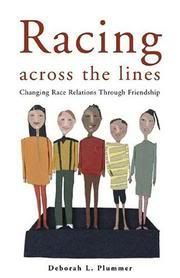
Image taken from Openlibrary.org, hosting by Photobucket Most people in Malaysia put much importance on the question of ethnicity and/or race. For some reason, or reasons, that no one really has been able to explain to Walski satisfactorily.

But that’s the reality we have today – that for many people, ethnicity/race is important – like it or not, fully understand it or not. Despite the fact that the whole construct of Melayu/China/India/Dan-Lain-Lain, as it is today, is one that can probably be considered an imported one that we decided to keep.

But if you think about it, have inter-racial relations deteriorated only of late – post GE12, in particular? Well, if you were to ask Walski, his answer would be: it depends. On what? Well, primarily depending on what you hear and read about.

Which is where the media comes in. Be it print, traditional electronic or even new media (blogs and microblogging platforms such as Twitter), compared to a decade ago, we have a heckuva lot more sources of information available to us.

And what the media has to say about the health of race relations, and more importantly, how it chooses to report race-related matters in Malaysia, play an important role in shaping our own opinion with regards to race relations. “Reality” is many times shaped by how we view it.

And it’s not just Walski who thinks that the media plays a big role – the Center for Independent Journalism (CIJ) thinks so, too.

So much so that they’ve taken the trouble to put together a forum to discuss exactly this topic as part of their World Press Freedom Day celebrations.
(CIJ’s WPFD program, and more, in the full post)

CIJ website masthead, image hosting by Photobucket Although the actual World Press Freedom Day falls on May 3rd (last Monday), CIJ has decided that their program would be a bit later in the week.

Entitled “Building Peace Across Communities”, the program will be held on Saturday, May 8th, 2010 (from 10:30am to 1:30pm) at The Annexe Gallery, Central Market Annexe, Jalan Hang Kasturi, in KL.

Building Peace Across Communities” itself will be a forum, with four panelists from regional media organizations participating. As of the time of posting, the confirmed panelists are:

  • Ms Insany Syahbarwati, head of the Maluku Media Center, Ambon, Indonesia
  • Dr Mustafa K. Anuar, communication studies lecturer at Universiti Sains Malaysia
  • Ms Jacqueline Ann Surin, editor of The Nut Graph
  • Ms Prangtip Daoreung, Asian Public Intellectuals Fellow

The panel will answer a set of pre-prepared questions, as well as respond to questions from the floor, as outlined by CIJ in their program write-up that Walski received.

The background as to why this theme was chosen is perhaps best explained by CIJ themselves (emphasis by myAsylum):

52 years ago, on 1 September, newspapers heralded the birth of a new nation comprised of peoples of multiple ethnicities. Today, the media buzzword is 1Malaysia, a concept introduced by the government of the day as an affirmation of the various ethnic groups that make up the nation.

That the concept itself is needed five decades after Independence is a reflection of the deteriorating state of race relations in the country.

For media watchers, it brings to question the role that the media has played as both shaper and mirror of society, constrained as they may be by the sociopolitical and ownership demands of the environment in which it operates.

How has the media coverage of ethnic relations been? What are the challenges journalists face when it comes to reporting on matters that involve the apparently still-sensitive issue of ethnicity? What are the ways of providing space for meaningful discussion on ethnic issues without distilling the truth of the story? Is this issue of media representation of ethnic groups a concern across Malaysia or is it only a peninsular preoccupation?

Looking ahead, how can the media reflect the commonalities that the 1Malaysia concept strives to highlight above the differences that are nevertheless an essential part of what makes our nation? What are the lessons we can take from our neighbour Indonesia, which has experienced some of the most violent ethnic/religious conflicts in the region, but whose civil society organisations – including media – have risen to the challenge of mediating for peace?

(source: CIJ Publicity Note)

In addition to the forum, the program will also mark the launch of CIJ’s annual report, “Freedom of Expression in Malaysia 2009: An Annual Review by CIJ”. It will be interesting to see what CIJ has to say about the state of freedom of expression in Malaysia today. From what Walski has seen the last 12 months, the report is not expected to be very complementary.

Unfortunately, Walski won’t be able to attend due to other prior commitments, but he is certain that it will be an interesting program. So, if you have some time tomorrow morning, do make your way to the Central Market Annexe.

Walski’s personal view about the media – in any form – is this: every medium of information dissemination has its inherent bias. There’s really no escaping this. The question then becomes, how much bias? And that’s not an easy question to answer, because it will depend on our own individual world-view as consumers of information. On a rough scale, though, Walski rates the media we have today in Malaysia as ranging from “leaning towards”, to “blatantly biased”.

Because our individual world-views vary, a news organization that is objective in its reporting could be seen to be biased because it doesn’t support our own viewpoints and leanings.

And this is important to realize especially when it comes to issues that we, as a society, still regard as sensitive – in the context of Malaysia, race and religion. So of all the panelists mentioned, it would be the Indonesian experience that Walski would be most interested to hear, because they’ve gone through a recent period of heightened ethnic tension, and have survived it. ‘Recent’, of course, in the larger context of history, where a decade is not really considered a very long time.

Being a frequent visitor to Indonesia, however, Walski’s observation is that the best way forward is by being honest and objective – Indonesian media today is known to be quite no-holds-barred when it comes to reporting. And in the long run, he feels that Indonesians will be the better for it.

Nothing is swept under the carpet, to the nether regions of what you don’t know won’t hurt the powers that be. Yes, that’s Walski’s personal view, tinted with his own personal bias.

With the anniversary of the May 13th Tragedy less than a week away, we’re already starting to see the usual “reminders” by certain interested quarters, making use of the usual media channels, which in Walski’s book can be categorized in the “blatantly biased” bin. The difference today, compared to a decade ago, is that there are counter-voices aplenty via other media channels, questioning the need for these annual reminders.

Which is a good thing – taken as a whole, the availability of various channels of media, with various leanings, is good for a heterogeneous society such as ours. Certain opinions are tempered with counter-arguments, and everybody with something to say, has their say.

With the viciousness of the Hulu Selangor media politicking behind us, and with the anniversary of May 13, the CIJ program is definitely timely. And like Walski said earlier, if you’ve got the time, do attend.

But the 2 questions that remain in Walski's mind, however, are these: Exactly how fragile are race relations in Malaysia today? And if the media is used as a race relations barometer, how accurate a measurement does it really provide?

Reblog this post [with Zemanta]

Click here for the full post......

Wednesday, May 05, 2010

Book Review: What Your Teacher Didn't Tell You

Technorati tags: , , , , , ,

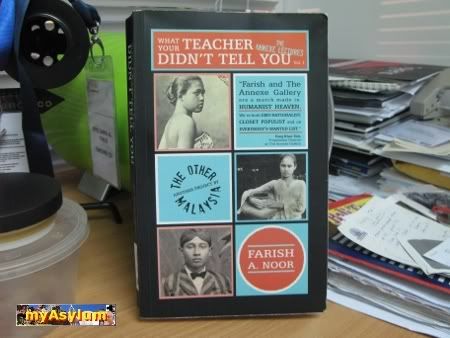
Front cover of Walski's own copy, image hosting by Photobucket What Your Teacher Didn’t Tell You: The Annexe Lectures (Vol. 1)
Author: Farish A. Noor
Publisher: Matahari Books
ISBN: 9834484534
EAN: 9789834484538
Paperback, 288 pages

At one point or another, history would have been part of the curriculum we were exposed to in school. Walski has to admit that when he was in school, history was never a subject he liked. In retrospect, it’s probably because of how it is taught – when, where, who, and what being the four things stressed most.

And being that Walski didn’t really excel in those subjects requiring lots of memorization, he tended to avoid history. To his discredit.

But that has changed over the last decade or so – and one of the reasons for that change has been Walski’s exposure to the many untold stories about our collective history – that of our nation, as well as that of the immediate region our country resides in. Things his teachers never told him about. And perhaps one of the most important sources of these obscured stories, as far as Walski’s concerned – Farish A. Noor.

It is unfortunate that the national and regional history most of us would have typically been exposed is quite rigid, and told from a rather narrow, and sometimes selfish, perspective. But this book aims to open our eyes to history that has been, for the most part, obscured, untold and, to some extent, withheld.

This book is a compilation of five Central Market Annexe lectures, delivered by Malaysia’s hippest academician, Farish Noor, between March 2008 and September 2009. Walski was fortunate enough to attend one of them, which appears as the second chapter in this book (“The Lost Tribes of Malaysia”).

But believe you Walski when he says this – if there were to be one, and only one, book you read this year, you need to make sure that it’s What Your Teacher Didn’t Tell You.
(history obscured and withheld, and more, in the full post)

So, why is this book so important? Before we delve into that in more detail, perhaps a look at why this book was put together might be useful, as a prelude to answering the question.

In the Introduction, Farish outlines two reasons why this book was published, and why (in Walski’s opinion) every Malaysian should read it. Firstly, there is (emphasis by myAsylum)

"...the urgent need for Malaysians to reclaim the histories, biographies, symbols, tropes, and markers that dot the narrative and discursive landscape of Malaysia from the clammy clutches of politicians, ideologues and soapbox orators who would otherwise be inclined to reduce the semiotic repertoire of our public discursive domain to simplified and essentialised totems that stand for a communitarian and divisive politics that is not only historically inaccurate, but politically dangerous."
(Introduction, pp. 12 - 13)

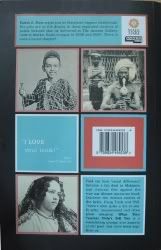
Back cover of Walski's own copy, image hosting by Photobucket Simply put, what we know of our past has been oversimplified and condensed into a mould meant to serve ulterior and narrow political motives. For example, little, if any, is ever spoken about the influences of Hindu and Buddhist cultures that have actually played a major role in forming what we know as “Malay” culture today. Similarly, the notions that Chinese and Indians only appeared on our landscape during late colonial times, as recent social ingredients that have made Malaysia multicultural – notions that play very well into the exclusivist political rhetoric that we hear all too often today in our nation.

The second reason why this book is important, is that our obscured history has for too long been only available, for the most part, to the academicians. Hence, the uniqueness of where this wealth of information was initially presented to the general public.

"... these lectures were delivered at Central Market Annexe Gallery with the intention of proving a point that ought to be made time and time again: that academia is not to be confined within the hallowed precinct of universities solely, but rather that knowledge-production is something that takes place in the social arena"
(Introduction, pg. 14)

In other words, the intent of this compilation is also to make our obscured histories accessible.

And what important information does this book make accessible to us?

As Walski had mentioned earlier, What Your Teacher Didn’t Tell You is a compilation of 5 lectures Farish delivered at the Central Market Annexe Gallery. It also includes one interesting “Bonus Chapter”.

The book starts off by lamenting what today is probably best known as an icon of “Ketuanan Melayu” – the keris – that wavy dagger often flayed around by certain politicians in heat. In “Pity The Poor Keris”, Farish walks us through the long, almost 2 millennia-old, history of a thoroughly misunderstood cultural icon. And in doing so, we begin to see how Hindu/Buddhist cultures of old have contributed to a culture most of us identify as having been “always” Islamic in origin and nature – the “Malay” culture.

Pity The Poor Keris” urges us to rediscover the blade’s multifaceted cultural origins, in an attempt to understand how our own culture evolved over the many centuries. The keris, as we discover, is much more than just an instrument of violence. And through our journey, we also discover how metropolitan our region was prior to the arrival of Western colonialists, whose biggest contribution is perhaps in how their then world-view has been transplanted to shape our own popular image of regional and national history.

But far from being blindly anti-colonial and anti-West, What Your Teacher Didn’t Tell You is objective in it’s criticism of colonial empire-building, and the many side-effects thereof. And it’s exactly this critical rediscovery and rereading of history that Farish tries to impart on his readers.

Perhaps the most pertinent chapter in helping us understand the socio-political dichotomy of Malaysia today, is the second chapter, entitled “The Lost Tribes of Malaysia”, which interestingly enough, is sub-titled ‘The Construction of Race Politics from Colonial Era to The Present’’. Interesting, because it is in this chapter that we discover how the multitudes of diverse and rich cultures present in the 19th century were gradually distilled to become the Malay/Chinese/Indian/Others demographics we know today.

Reading this chapter, you’ll immediately understand why Walski usually writes the word “Malay” enclosed in quotes.

And Walski is probably not exaggerating when he says that it is exactly this very over-simplified dichotomy that Malaysians today, at large, accept as “naturally” the way things have always been, and should forever be. Reading the book, however, we discover that the historical facts are actually furthest away from this popular notion, that we’ve been programmed to accept as the only possible reality.

Walski's copy of the book, which admittedly has seen better days!

The next chapter, “Of Rajas, Maharajas, Dewarajas and Kerajaan”, is equally relevant to our Malaysia today. For in it, we discover the four thousand year old reason why we remain somewhat feudal in our outlook. At the very least, it finally convinces Walski that old habits are indeed hard to break. Particularly when those habits are ones that we ourselves subconsciously nurture.

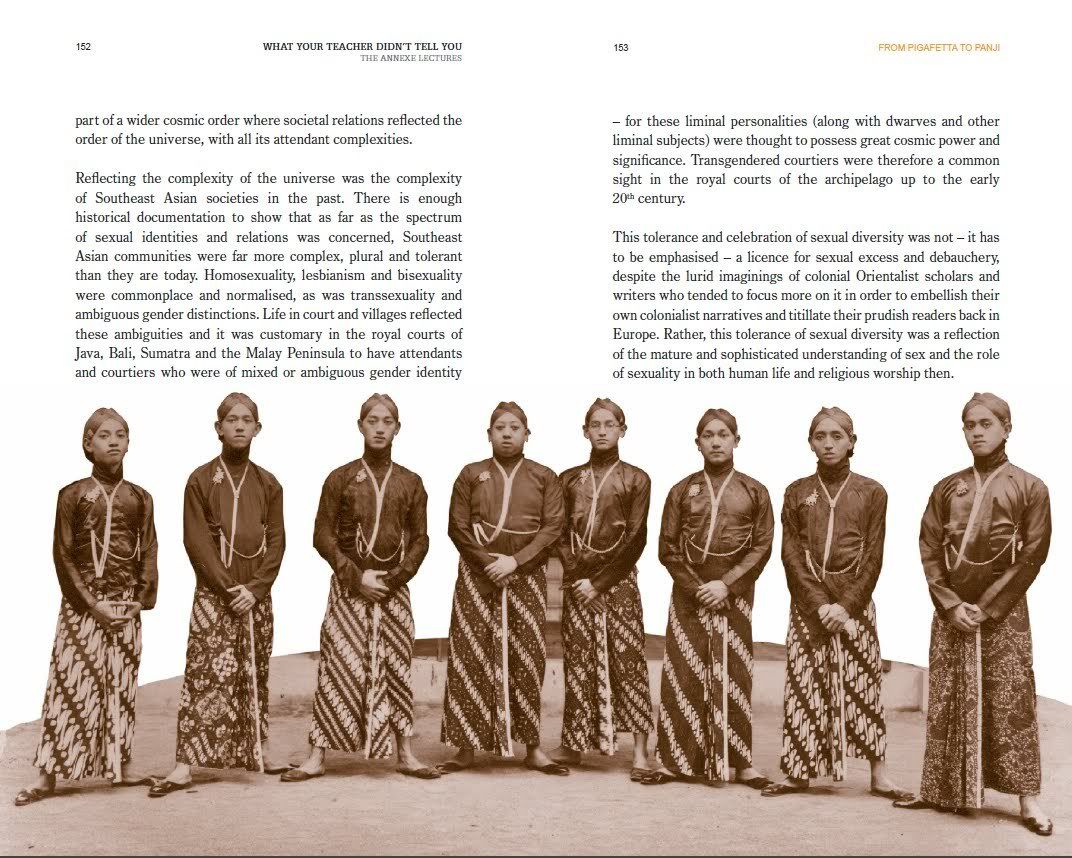
From Pigafetta to Panji”, a lecture originally delivered on August 31, 2008, departs from the political somewhat to dispel the idea that certain behaviors deemed reprehensible by our religious authorities and moral guardians, like the “shocking phenomena” of lelaki lembut and tomboy-ism, for instance, are not alien and/or Western-influenced evils. In fact, this interesting foray into the history of Southeast Asian sexuality tells us quite the opposite – that homosexuality and gender-bender scenarios are, in fact, very much part of our “Asian values”, seen from an historical perspective.

The final chapter in the book is a critical analysis of another misunderstood and purposefully misrepresented icon – the legendary Hang Tuah. Farish, in this chapter, reveals to us that the so-called ideal and unquestioning Malay warrior, the image of Tuah that has become a favorite fodder of modern-day exclusivist ethno-nationalists, had a totally different, and Walski dares say, more important, side to him - “Hang Tuah The Pacifist”.

Using Kassim Ahmad’s compilation of Hikayat Hang Tuah as reference (one that is admittedly the most complete and authoritative), Farish walks us through the second part of the Hang Tuah epic – one that is very rarely mentioned.

"Sadly, most Malaysians today have yet to read the Hikayat Hang Tuah in its entirety, and many do not even realise that the most common versions of the story that we know (particularly the more plebeian renderings of the tale dished out to us thanks to the modern miracle of cinema) are incomplete. In fact, most Malaysians remain blissfully unaware of the second part to the Hang Tuah epic, where Tuah the warrior assumes a different role altogether, as the emissary of Melaka to foreign lands."
(from Hang Tuah The Pacifist, pg. 242)

And equally as sad, Walski will have to admit that he, too, is part of that “most Malaysians” demographic (although he does intend to remedy this inclusion in the very near future).

To Walski, the second part of the Hang Tuah epic is important because it gives a totally new perspective to the oft-quoted and over-used “tak kan Melayu hilang di dunia” (‘never will the Malays perish’). This new perspective provides a renewed hope that all is not lost, when it comes to our nation, and that there is historical precedence for positive change. And it is with this important point that Farish closes the chapter, and the book.

Nestled between the fourth chapter (“From Pigafetta to Panji”), and the last, is the bonus chapter mentioned earlier – “The Red-Green Alliance” which unlike the other chapters, did not originate as an Annexe lecture. It is, in fact, a look at what Farish calls ‘the left-leaning years’ of the Pan-Malaysian Islamic Party, which we today know better as PAS.

What Walski found interesting about this bonus chapter is two-fold – first, that PAS today is not the same PAS that was formed in 1951, nor was it the same party in existence in 1956 to 1969, the period which this chapter focuses on, by examining the life of the party’s third president, Dr. Burhanuddin al-Helmy. Second, that it isn’t only the Alliance/BN continuum that can lay exclusive claim to the credit of fighting for an independent Malaya. An important what-if that arises from reading this chapter: this would have been a totally different Malaysia if our British colonialists had been more receptive to the demands of other political entities of the time.

And therein lies the importance of this book: to understand why we are the way we are today, it’s imperative that we know the history of how we came to this point in our collective existence. But not just the official and popular narratives of history, taken at face value – it’s equally important to learn and understand alternative views of history, told either from different perspectives, or through the lens of society at the time – made possible by examining the writing and literature of the time. This analysis and

Only when we fully understand ourselves can we hope to create a framework and road map to a better collective future. Relying solely on the status quo will only take us where the status quo wants us to – which is not always a desirable destination.

It is therefore for these reasons that Walski strongly recommends this book to anyone who cares about this nation, and would like to help build a stronger country for our future generations.

And if these reasons on their own aren’t important enough, and the fact What Your Teacher Didn’t Tell You is a book that’s been beautifully and artistically put together should be an added bonus. Walski will tell you that publisher Amir Muhammad does not exaggerate when he said that it is, by far, “the most gorgeous book we have produced". Credit goes to Liza Manshoor (of Eclectic Design) for making the book a visual masterpiece – the beautiful layout added to making the book not just an important read, but a joyful literary experience on top of that.

Image taken from Writing by Amir, hosting by PhotobucketPages 152/153 of the book - image taken from Writing by Amir

As another added bonus (assuming you’re still not sold on the book), law professor Azmi Sharom (another hip Malaysian academician, whose bi-weekly column Brave New World is published by The Star) contributes a preface piece, about the important role of the academician – a role that is unfortunately very much undervalued in our current socio-political climate.

Perhaps the only very minor fault that Walski could find with What Your Teacher Didn’t Tell You is that the footnotes, liberally found throughout the book, can get a tad distracting. That said, these footnotes are a necessary distraction, providing insightful perspectives and sources for further reading. A friend of Walski’s did remark, though, that he thought the book read a bit too much like a history textbook.

A history textbook it may be, but it’s like no other textbook you’ll ever find. The engaging and eye-opening content, coupled with the aesthetically pleasing sepia-toned historical imagery artistically chosen to accompany the worthwhile text, plus the unique thick-cut paper used, making sure that the meaty text physically feels meaty, all come together to make Farish A. Noor’s What Your Teacher Didn’t Tell You a must-read for 2010.

~ ~ o O 0 O o ~~

Walski's Technical Publishing Additional Information Footnote: Walski had the opportunity to briefly converse with Amir Muhammad (founder of Matahari Books, the publisher) on Twitter the other day. He mentioned that What Your Teacher Didn’t Tell You is already in it’s FOURTH edition (as of April 2010), and is a certified best-seller. That is indeed heartening to note, since Walski personally feels that this is a very important read for all Malaysians, no matter where you may be.

You can find this book in all major bookstores around the country and in Singapore, and also online, through Amazon.com. And just in case you’re wondering about Volume 2, Amir said that it would be published sometime in December this year, God-willing.

Reblog this post [with Zemanta]

Click here for the full post......